
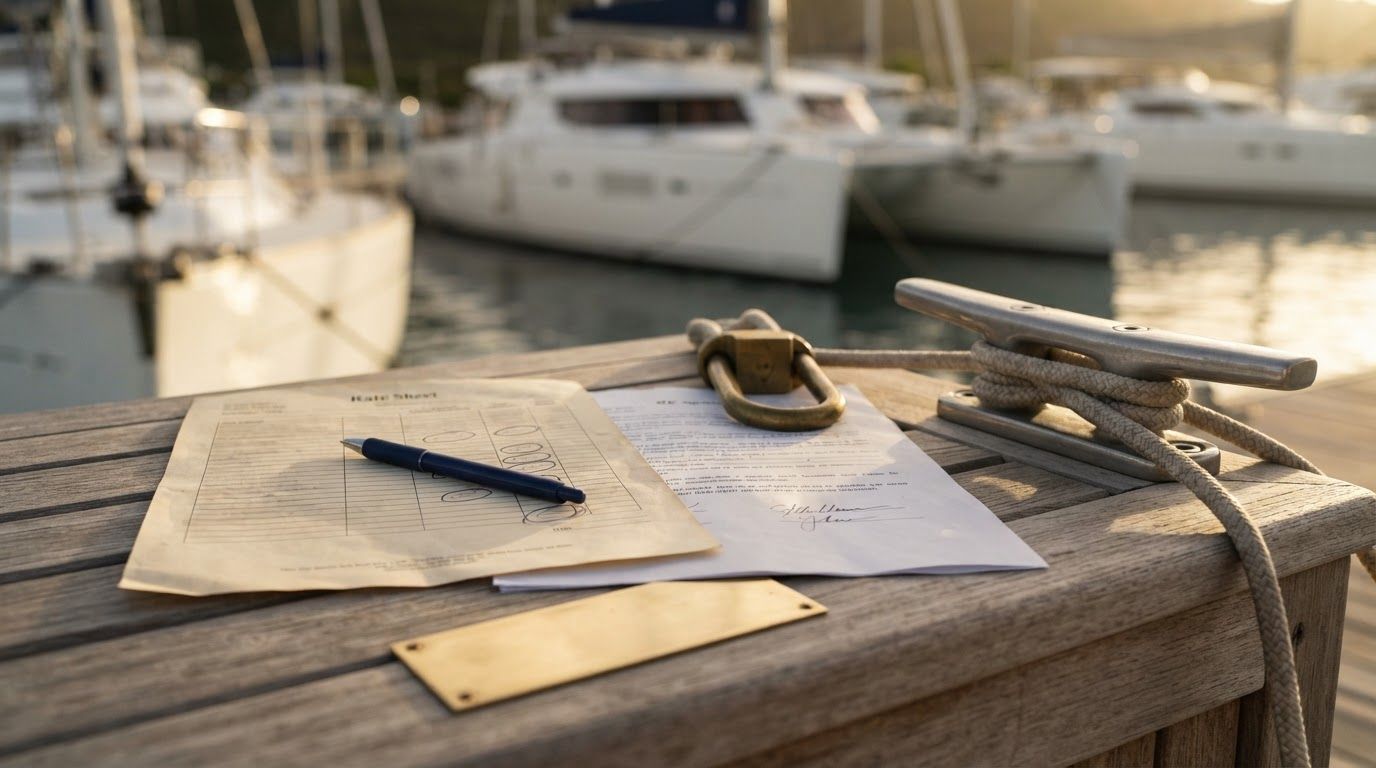
Ownership & Lifestyle · Dockage 2026
A boat slip costs roughly $15 to $35 per foot per month at a typical coastal marina, $40 to $75 in premium harbours, and $1.25 to $1.50 per foot per night on a transient basis in the Caribbean. Catamarans usually pay more than their length suggests.
$15–$35
Mid-tier US coastal, per foot per month
$40–$75
Premium US harbour, per foot per month
$1.25–$1.50
Caribbean transient, per foot per night
1.5×
Typical catamaran beam multiplier
Published marina rate cards, 2025–26
Rates checked
The short version
- 01
Dockage is quoted per foot, but marinas charge on slip length or LOA — whichever is greater — so a 44 ft boat in a 50 ft slip pays for 50 ft.
- 02
The per-foot rate usually rises with slip size rather than falling; bigger boats pay more per foot, not less.
- 03
Catamarans are commonly charged 1.5× the monohull rate, or billed on beam as well as length. Almost no marina publishes this.
- 04
The quoted rate rarely includes metered electricity, water, liveaboard fees or storm-season premiums — budget 10 to 25 percent on top.
- 05
A mooring ball in the Caribbean costs a fraction of a slip and is the realistic default for cruising boats that only need dock time occasionally.
What a Boat Slip Costs: The Short Answer
Across the United States, monthly slip rates at inland and mid-tier coastal marinas run about $15 to $35 per foot per month in 2026. Premium waterfront markets — Southern California, Miami, Newport, Annapolis in season — run $40 to $75 per foot and higher. In the Caribbean, most marinas quote transient dockage nightly rather than monthly, typically $1.25 to $1.50 per foot per night, with monthly and annual contracts negotiated at a substantial discount.
For a 40-foot boat, that is roughly $600 to $1,400 a month at a mid-tier US marina, $1,600 to $3,000 in a premium harbour, and $50 to $60 a night if you are simply stopping. Those numbers are the honest middle of a very wide range, and the rest of this piece is about the variables that move you within it.
How Marinas Price Slips
Three mechanics explain nearly every surprise on a dockage invoice. The first is that you are almost never billed on your boat’s actual length. Marinas bill on slip length or length overall, whichever is greater. A 44-foot catamaran assigned to a 50-foot slip pays for 50 feet, every month, for as long as the contract runs — and if your LOA includes a bow pulpit, davits and a dinghy hanging off the stern, the marina will measure that too. Ask which figure a quote is based on before you compare it with another marina’s.
The second is that the per-foot rate climbs with size instead of falling. Buyers routinely assume a volume discount that does not exist. The published municipal rates are the clearest illustration: the City of Newport Beach publishes its Balboa Yacht Basin slip rates at $53.34 per foot per month for a 40-foot slip, $59.03 for a 50-foot slip and $74.20 for a 75-foot slip. Going from 40 to 75 feet nearly doubles the rate per foot and more than triples the monthly bill.
The third is seasonality, which in the Caribbean cuts the opposite way to the US. Northern marinas price high in summer and dump rates in winter. Caribbean marinas price high from December to April and soften through hurricane season, when many owners haul out or move south of the insurance box anyway. If you are weighing where to keep a boat you are buying, that seasonal shape matters as much as the headline rate, and it feeds directly into the annual cost of owning a yacht in the Caribbean. An older boat holding down an expensive slip is usually the moment owners price what a repower costs against simply moving on to a newer hull.
Why Catamarans Pay More
This is the number nobody publishes and every multihull owner discovers at the invoice. A catamaran occupies roughly twice the water surface of a monohull of the same length, and marinas price the water, not the boat. The common structures are a flat 1.5× multiplier on the monohull per-foot rate, a beam surcharge billed per foot of beam above a threshold, or assignment to an end tie or T-head that is priced as a larger slip than your length would otherwise buy.
A 45-foot cruising catamaran with 24 feet of beam can easily pay what a 65-foot monohull pays, and in some marinas will simply be told there is no berth — finger piers in older harbours are spaced for monohulls and physically cannot take the beam. When you are comparing yachts for sale in the Caribbean and a multihull is on the list, get a written dockage quote for that specific beam at the marina you intend to use before the offer, not after. It is a larger annual line than most buyers model, and it is the single biggest gap between a monohull budget and a multihull one.
Rates by Region
Typical dockage by market, 2025–26
Published marina rate cards and broker experience, 2025–26. Ranges, not quotes — confirm with the marina.
| Market | Transient (per ft / night) | Monthly (per ft) | Notes |
|---|---|---|---|
| BVI — Tortola, Virgin Gorda | $1.25–$1.50 | Negotiated; well below nightly × 30 | Peak Dec–Apr; many boats on moorings instead |
| USVI — St Thomas, St Croix | $1.50–$2.50 | $20–$40 | US flag and duty advantages; tighter availability |
| Antigua | $1.50–$3.00+ | Negotiated | Superyacht demand in season distorts the top end |
| Grenada | $0.90–$1.50 | $15–$25 | Below the insurance box; storm-season favourite |
| South Florida | $2.50–$5.00 | $25–$60 | Fort Lauderdale and Miami at the top of the band |
| US East Coast — Chesapeake | $2.00–$3.50 | $15–$30 | Strongly seasonal; winter rates fall sharply |
| Premium US harbours | $4.00–$8.00 | $40–$75 | Municipal and club marinas; long waiting lists |
Two cautions about reading that table. First, transient rates multiplied by thirty are not a monthly rate; every marina that offers both discounts the monthly figure heavily, often by half or more, and a seasonal or annual contract discounts it further. Nanny Cay in Tortola publishes nightly dockage at $1.25 to $1.50 per foot, which is the structure the whole territory uses — but nobody keeping a boat there pays that rate for a year.
Second, availability moves price more than any published card. In a market where every slip is spoken for and the waiting list runs years, the real cost of dockage includes what you pay to be somewhere else while you wait.
Transient, Annual and Deeded Slips
01 · Transient
Priced nightly, booked on demand
A short-stay berth for a boat that is cruising. Quoted per foot per night, usually with a minimum, and often requiring a reservation weeks ahead in peak season. Most expensive per unit of time by a wide margin, and the only sensible structure if you genuinely move.
02 · Seasonal or annual
A contract, with a rate that reflects it
Six or twelve months at a substantially reduced per-foot rate, usually paid quarterly or annually in advance. Expect a security deposit, proof of insurance naming the marina, and a hurricane plan in writing if the berth is inside the storm belt.
03 · Deeded or leasehold
You buy the slip, not the service
Common in Florida and parts of the US East Coast. You own real property or a long lease, pay an association fee rather than rent, and can sell or rent it out. The purchase price is significant and the annual fees do not disappear — treat it as a real-estate decision that happens to float.
04 · Mooring ball
The Caribbean default
A maintained mooring in a protected bay, typically $30 to $45 a night regardless of length, or a fraction of slip cost monthly. No shore power, no water, and you run a dinghy. For a cruising boat that needs dock time only for provisioning and maintenance, this is the realistic baseline.
What the Rate Does Not Include
The per-foot rate buys you the water and the cleats. Nearly everything else is metered, surcharged or extra, and on a full-time berth these items routinely add 10 to 25 percent to the invoice. The items below are the ones that appear most often and surprise owners most reliably — they are also the difference between a dockage estimate and real liveaboard running costs.
- Electricity
- Metered separately; 30A and 50A service billed at marina rates, frequently above the local utility tariff
- Water
- Metered at many Caribbean marinas where fresh water is desalinated — a genuine line item, not a rounding error
- Liveaboard surcharge
- A monthly fee per person where liveaboard status is permitted at all; many marinas cap the number of liveaboard berths
- Storm-season premium
- Higher rates, or mandatory haul-out, at marinas inside the hurricane box from June to November
- Insurance requirements
- Proof of cover naming the marina as additional insured; minimum liability limits are contractual, not optional
- Pump-out, wifi, parking, gate cards
- Individually small, collectively a recurring monthly figure worth asking about up front
Before you sign
Known constraints
- hard
Confirm in writing whether billing is on LOA, slip length, or whichever is greater.
- hard
Confirm the beam policy and any multihull multiplier — in writing, for your exact beam.
- hard
Ask what the electricity and water are metered at, not just that they are metered.
- hard
Read the hurricane clause: who decides you must leave, by when, and what happens to the unused balance.
Slip, Mooring Ball or Dry Storage?
For most Caribbean owners the honest answer is a mix. A slip buys convenience: step-ashore access, shore power, water, security and somewhere to run a contractor’s extension lead. A mooring ball buys cheap, safe swinging room and costs a dinghy ride. Dry storage — hauled and stood in a yard — is the cheapest of the three per month and the right answer for a boat that is not being used, particularly through storm season, when many insurers price the difference for you.
The pattern that works for cruising boats is moorings or anchoring while in use, a slip booked for maintenance periods and provisioning, and a haul-out for the off-season. The pattern that does not work is paying for a premium slip twelve months a year for a boat that is aboard it for three.
Budgeting Dockage Into Ownership Costs
Dockage is usually the second-largest annual line after insurance, and unlike maintenance it is entirely predictable — which makes it the easiest place to be honest with yourself before you buy. Take the actual LOA including pulpit and davits, round up to the slip size the marina will assign, apply the multihull multiplier if it applies, multiply by twelve, then add 15 percent for metered services and fees.
Do that arithmetic before an offer rather than after, alongside pre-purchase survey costs and insurance, and the ownership budget stops being a guess. A boat that fits your cruising plan but not the berth you can actually get in your home harbour is a problem you want to find during the search, not during the closing.
The number to plan against
+15%
Add this to any quoted dockage rate to cover metered power, water and marina fees
BVI Yacht Sales
Frequently Asked Questions
QHow much is a boat slip per month?
For a typical coastal US marina, budget $15 to $35 per foot per month in 2026, which puts a 40-foot boat at roughly $600 to $1,400. Premium harbours run $40 to $75 per foot, so the same boat can exceed $3,000 a month. Caribbean marinas usually quote nightly and negotiate monthly and annual contracts well below thirty times the nightly figure.
QHow is slip cost calculated — per foot, per day, or per month?
All three structures exist, and the unit follows the contract type. Transient stays are billed per foot per night. Seasonal and annual contracts are billed per foot per month. The critical detail is which length the per-foot figure multiplies: most marinas use slip length or length overall, whichever is greater, so your billed length is often longer than the boat on the survey.
QWhat is a transient slip and what does it cost?
A transient slip is a short-stay berth for a boat that is passing through rather than based at the marina. It is the most expensive way to buy dock time — typically $1.25 to $1.50 per foot per night in the BVI, $1.50 to $2.50 in the USVI, and $2.50 to $5.00 in South Florida, usually with a nightly minimum and a reservation requirement in peak season.
QWhat is a deeded boat slip and is it worth buying?
A deeded slip is real property: you buy the berth, hold title to it, pay association fees instead of rent, and can sell or rent it out. It makes sense in markets with genuine scarcity and long waiting lists, where the slip holds value independently of the boat. It is a poor fit if your cruising plans might move you, because you have converted a monthly expense into an illiquid asset tied to one harbour.
QHow do Caribbean marina rates compare with Florida and the US East Coast?
Nightly transient rates in the BVI and Grenada generally sit below South Florida, which is the most expensive transient market in the region. Monthly and annual Caribbean contracts are typically competitive with or cheaper than Chesapeake and Florida equivalents. The real difference is not the rate but the structure: far more Caribbean boats live on moorings or at anchor, so slip cost is an occasional expense rather than a fixed one.
QWhat does a slip rate usually exclude — power, water, liveaboard fees?
All three, in most cases. Electricity is metered separately at 30A or 50A service, often above the local utility tariff. Water is metered at many Caribbean marinas where it is desalinated. Liveaboard status, where permitted at all, carries a monthly per-person fee. Add pump-out, parking, gate access and wifi, and the realistic all-in figure is 10 to 25 percent above the headline per-foot rate.
Buying in the Caribbean
Know the berth before you make the offer
We can tell you what a specific boat will cost to keep in the harbour you intend to use — beam and all — before you commit to it. That conversation is free and it has saved buyers a great deal of money.
Cite this article
BVI Yacht Sales (2026). Boat Slip Cost: What Dockage Really Runs, by Length and Region. BVI Yacht Sales. Retrieved from https://bviyachtsales.com/boat-slip-cost-dockage-rates/
Featured Listings
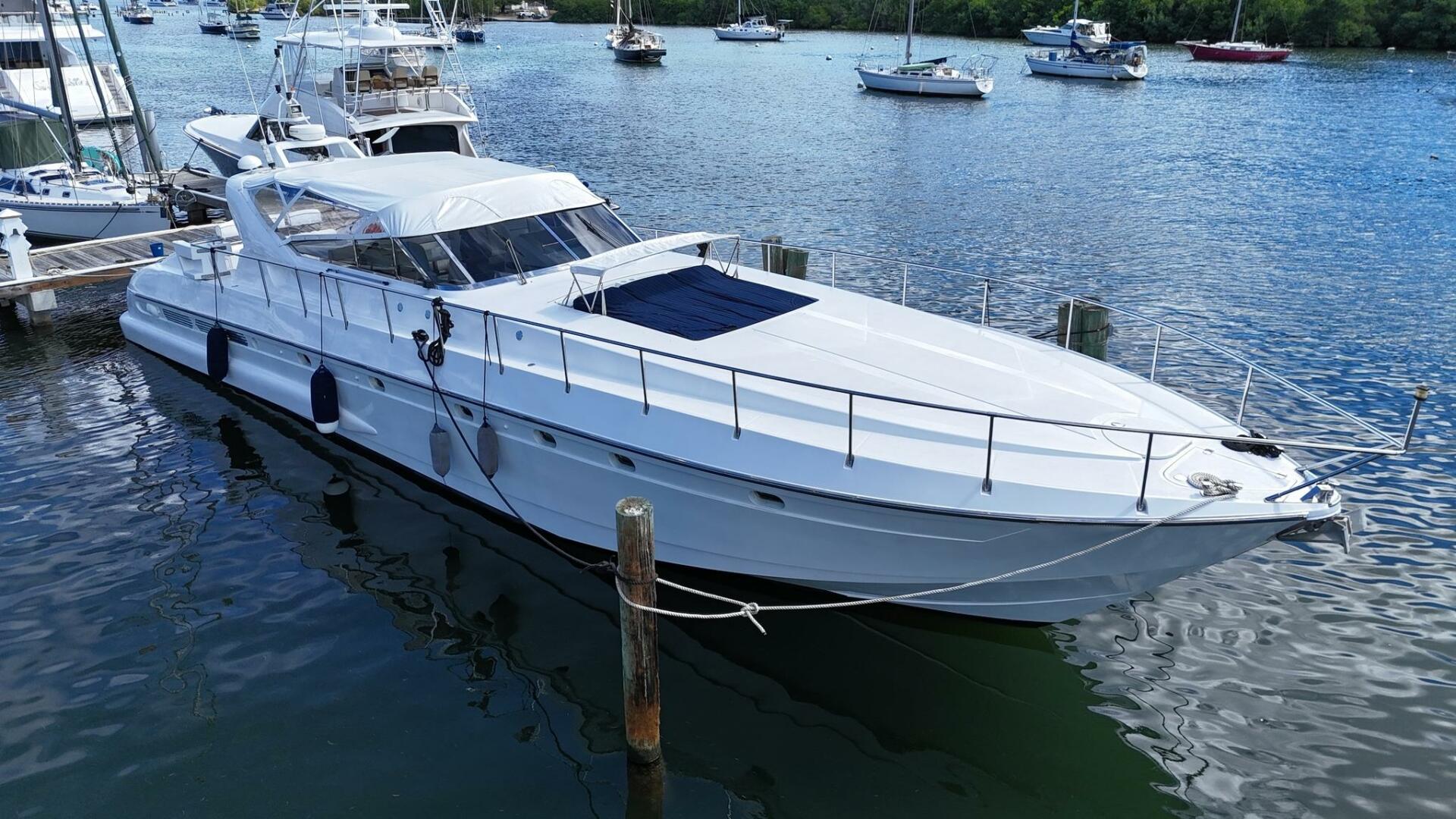
$599,000
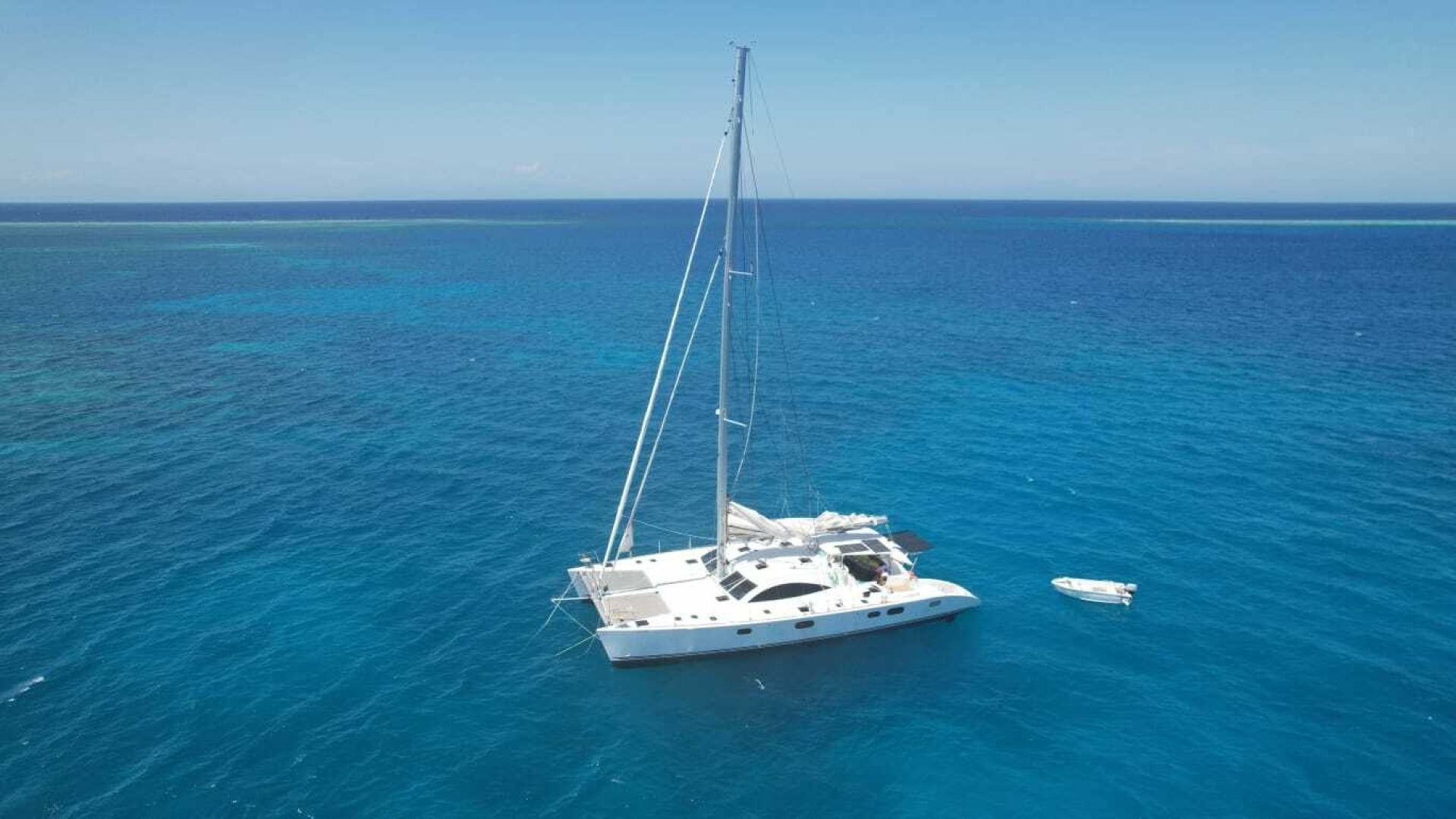
$1,300,000
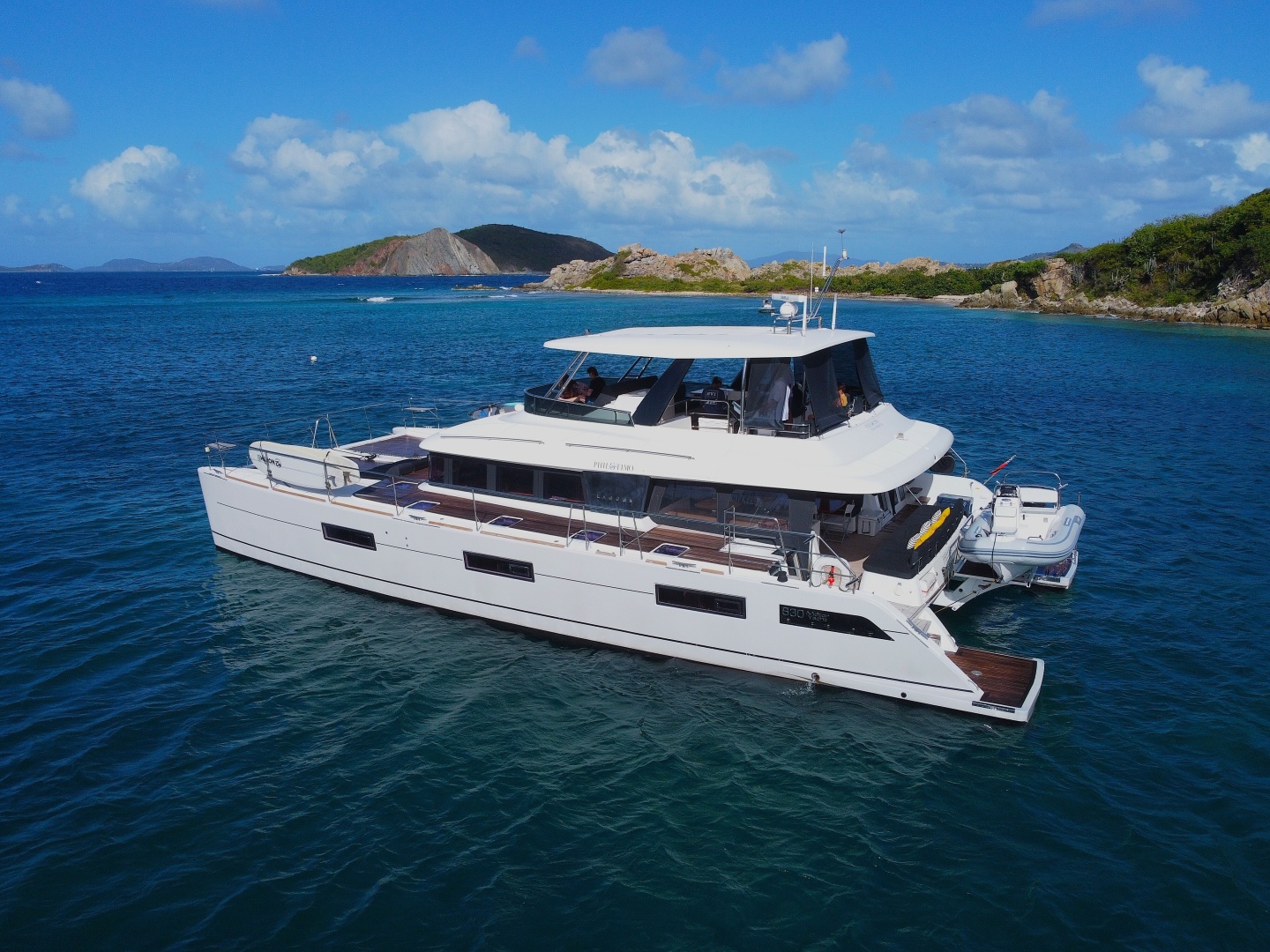
$1,699,000

$299,000

$899,000
$1,795,000

$269,000
$359,000
$499,500
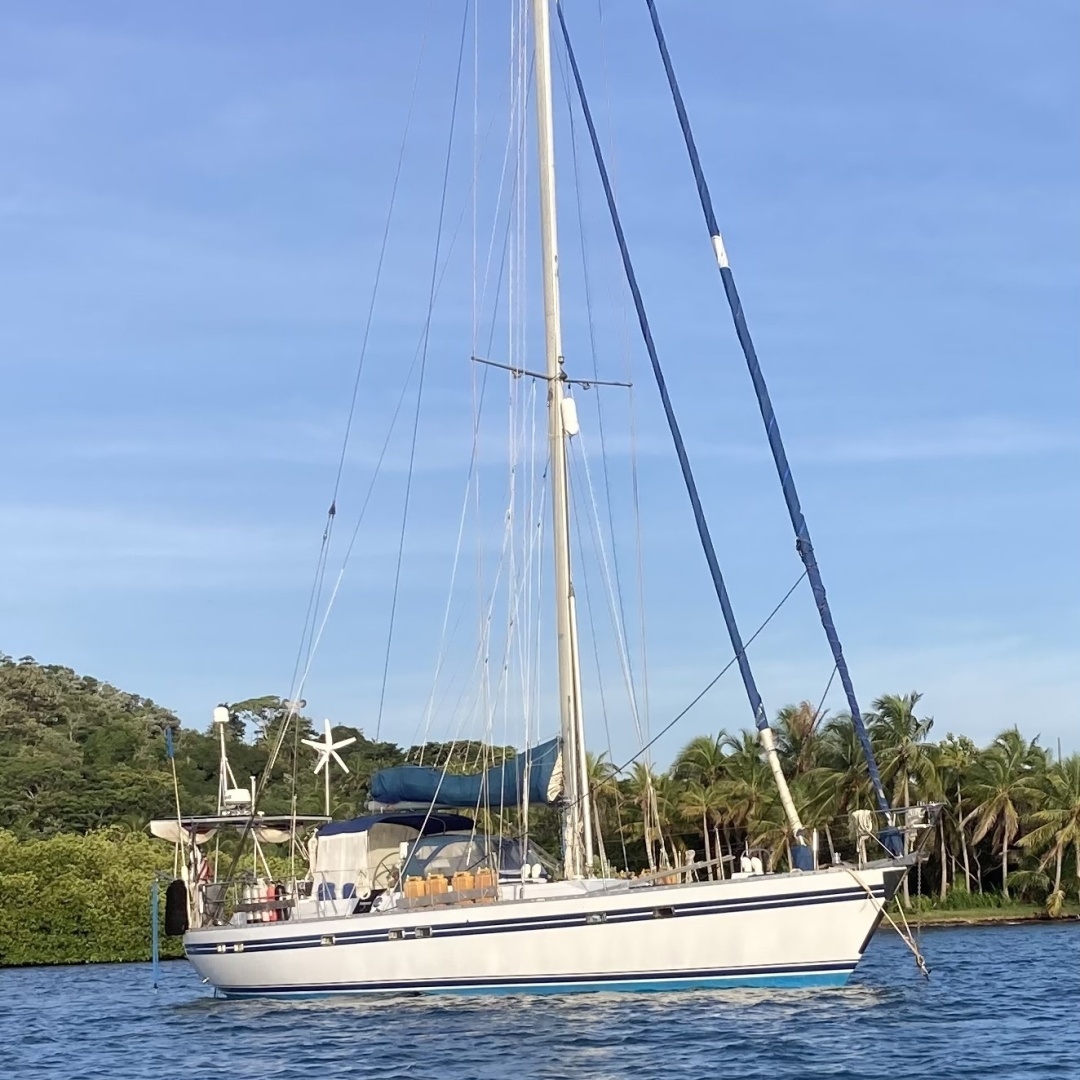
$299,500
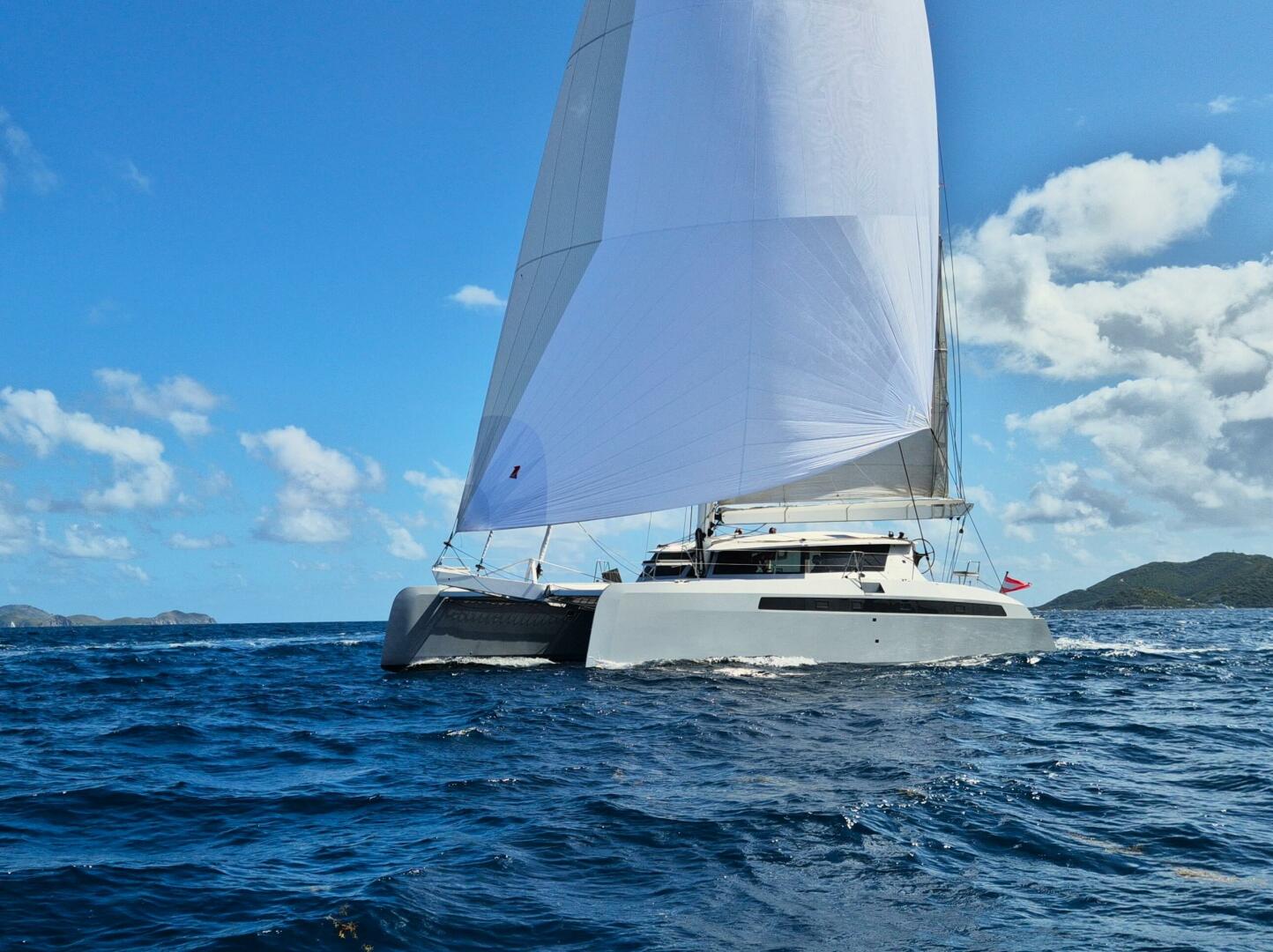
$1,290,000
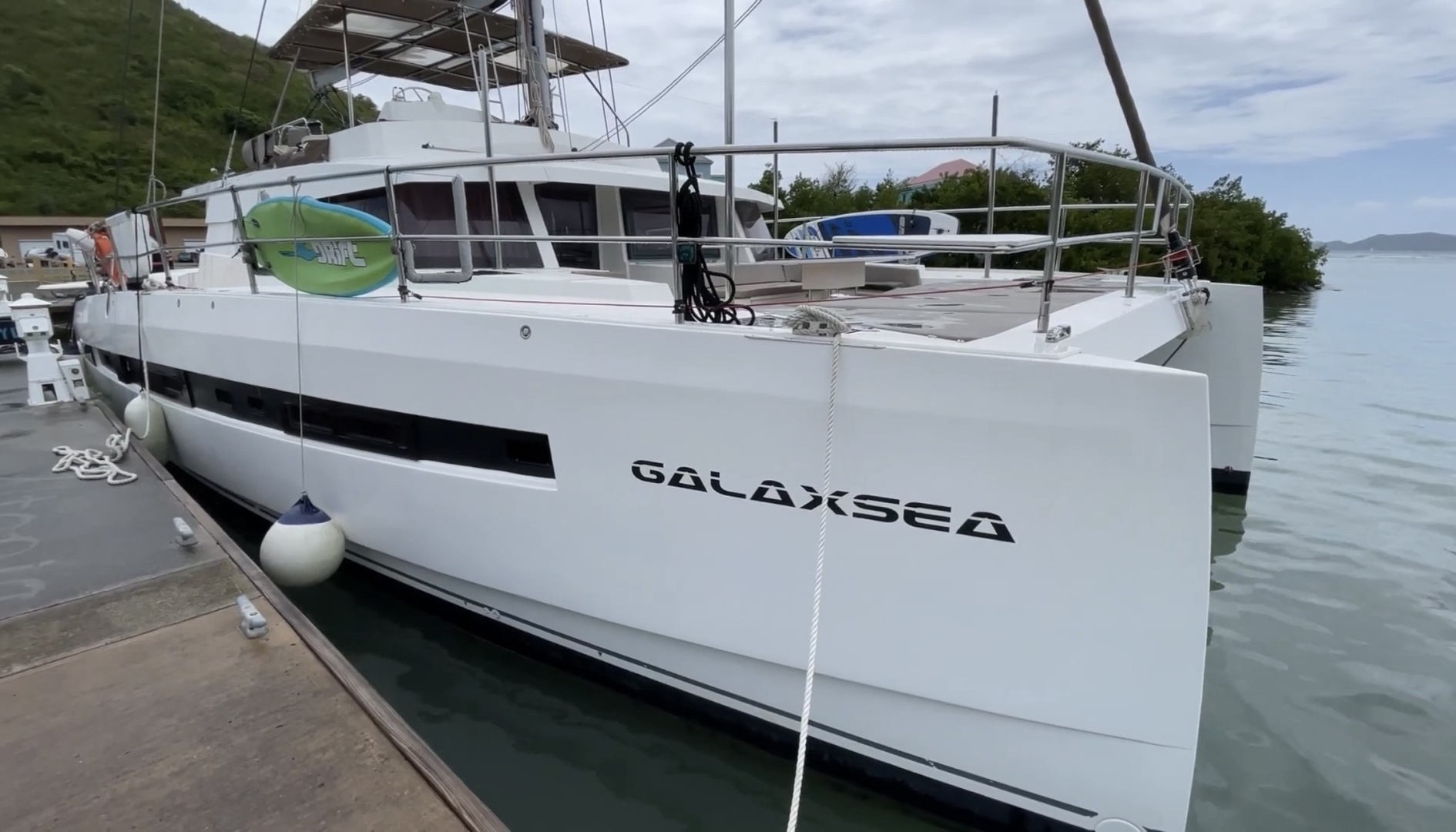
$800,000
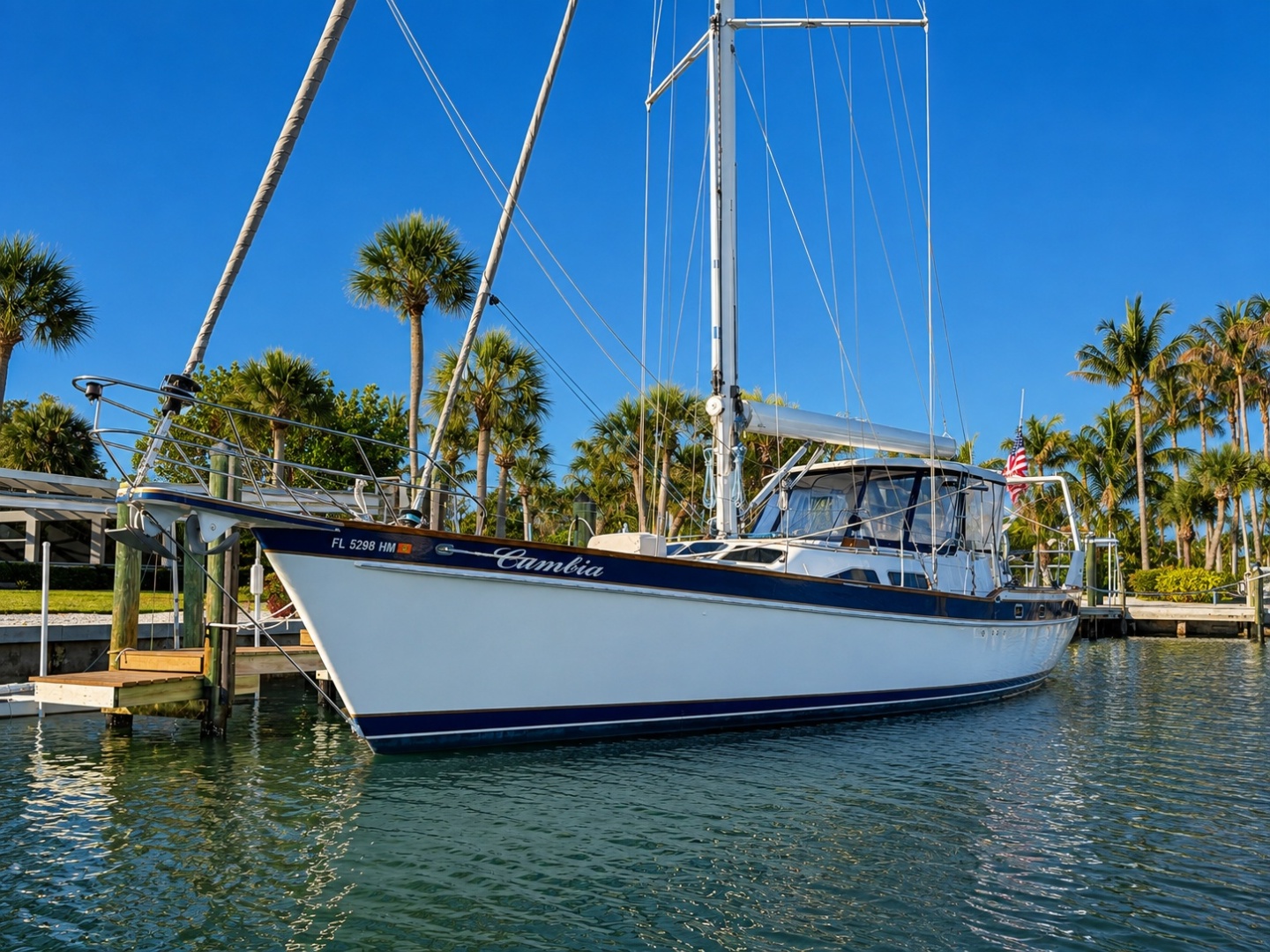
$545,000
$564,900
$1,130,000
$159,000
$499,000
$89,000
$89,000
$135,000
$98,250
$149,850
$369,000
$395,000
$349,000
$125,000
$1,724,571
$149,500
$109,900
$395,000

$652,000
$105,000

$115,000
$950,000
$149,000
$135,000
$349,000